Your Mind and Body Are Talking to Each Other
Menopause is not only physical. Stress hormones like cortisol can make hot flashes, anxiety, and sleepless nights noticeably worse. That is why mind-body practices — yoga, breathwork, and mindfulness — are among the most soothing and well-supported natural tools you have. They work by calming your nervous system, which then quiets the physical symptoms.
What the Research Shows
Yoga
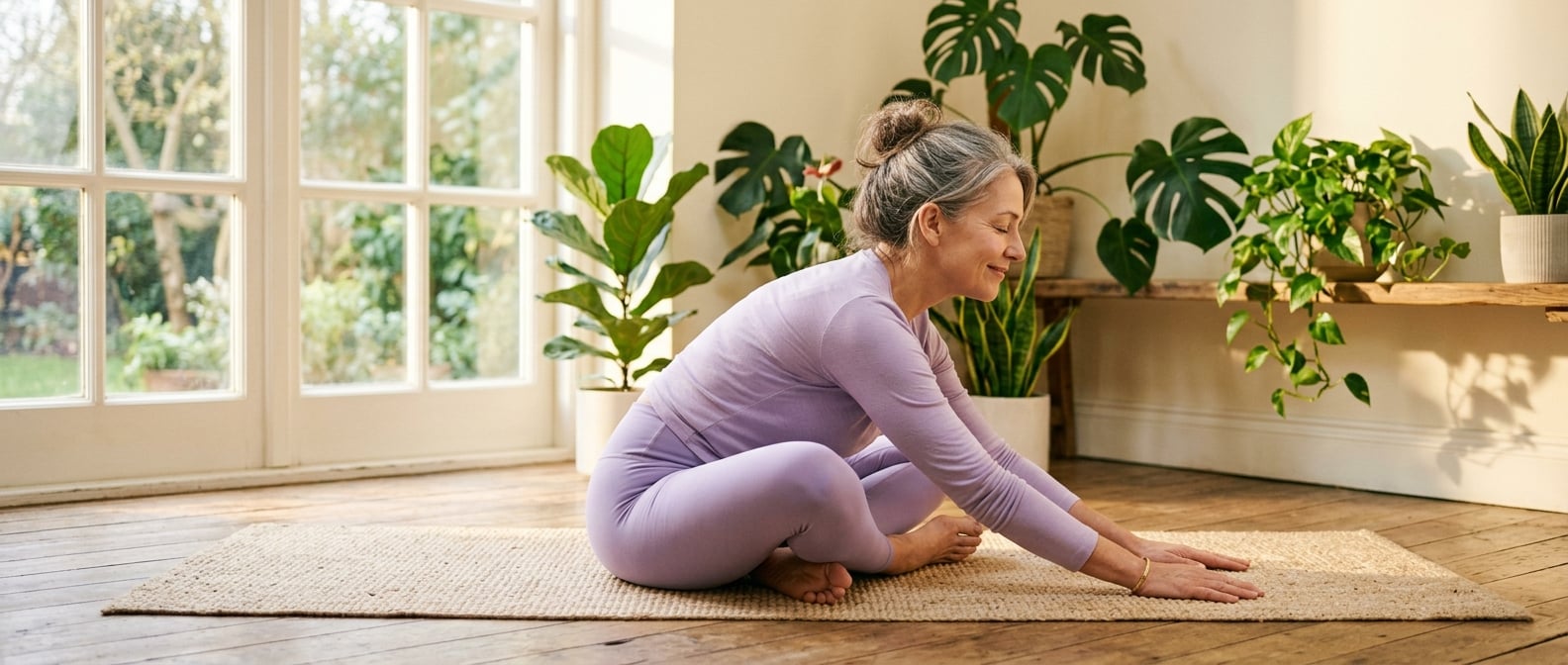
Systematic reviews and randomized trials have found that regular yoga can meaningfully improve menopausal symptoms. In one 2024 trial, practicing yoga for 60 minutes twice a week over 10 weeks led to significant drops in overall menopause symptom scores. Women also reported better sleep, less anxiety and low mood, and greater body confidence. Gentle, restorative styles are perfect — this is not about difficult poses.
Slow, paced breathing
One of the simplest and most powerful tools is your own breath. Slow breathing — long, gentle exhales — can reduce the frequency of hot flashes and switches your body out of "fight or flight" into "rest and restore." Even a few minutes during a hot flash or before bed can help.
Mindfulness and meditation
Mindfulness-based stress reduction (MBSR) lowers cortisol and improves emotional resilience, sleep quality, and mood. Cognitive behavioral techniques are especially well-proven for helping women cope with hot flashes and night sweats — changing how the body and mind react to them.
Tai chi and qigong
These flowing, meditative movement practices have been linked to reduced fatigue and even support for bone density — a lovely bonus during a time when bone health matters.
An Honest Note
Professional bodies view these practices as safe, valuable complements to your care rather than replacements for medical treatment. The evidence is positive but still developing, so think of them as gentle allies that improve your quality of life — beautifully paired with good nutrition, sleep, and, when needed, medical support.
How to Begin (Start Tiny)
You do not need a studio or an hour a day. Try:
- A 4-minute breathing reset: inhale for a count of 4, exhale slowly for 6. Repeat. Use it during a hot flash or before sleep.
- 10 minutes of gentle yoga in the morning — a few slow stretches and forward folds.
- A short guided meditation using any free app while your coffee brews.
- A mindful walk in nature, noticing your breath and surroundings.
Consistency matters far more than intensity. Five calm minutes every day beats one long session once a month.
GoBloomWell includes guided breathing and lets you track your mood, stress, and sleep — so you can see how mind-body practices are helping. Start tracking for free today.