A Gentle Sensory Tool for Hard Moments
Aromatherapy will not replace medical care, but as a soothing, sensory ritual it can genuinely help take the edge off menopause's harder moments — the 3 AM wakeups, the wave of anxiety, the flush of a hot flash. When you inhale an essential oil, aromatic molecules reach the limbic system, the part of your brain that governs emotion, memory, and stress. That is why a familiar calming scent can shift your mood almost instantly.
Oils Women Reach For Most
For sleep and calm
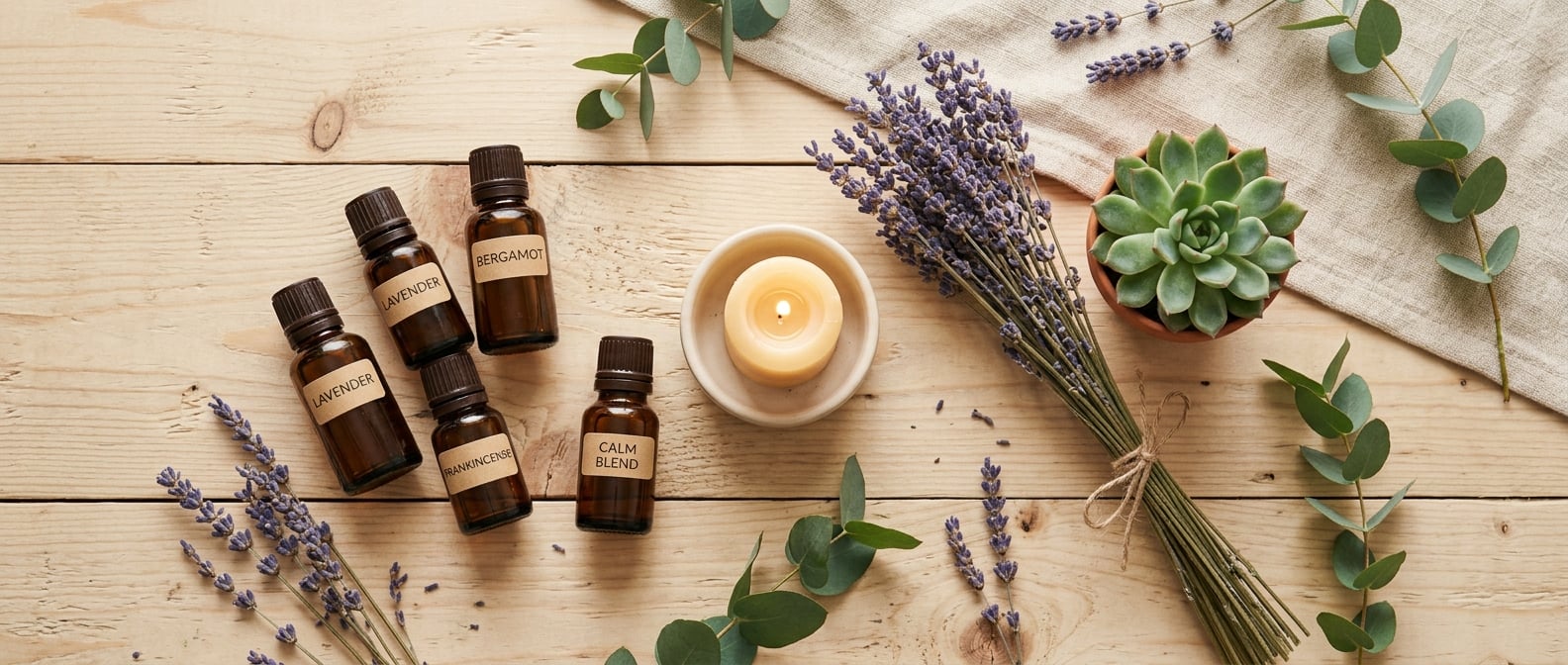
- Lavender — the most researched oil for sleep and anxiety; a few drops on a tissue by your pillow or in a diffuser.
- Chamomile and cedarwood — gentle, grounding, and relaxing before bed.
For stress and low mood
- Bergamot and neroli — associated with lower cortisol and blood pressure.
- Frankincense for emotional grounding; ylang-ylang to soften irritable, racing-heart moments.
For hot flashes
- Peppermint and spearmint offer a cooling menthol sensation — diluted and dabbed on the neck or wrists.
For energy and focus
- Lemon, rosemary, and peppermint can lift fatigue and brain fog. (Skip rosemary if you have uncontrolled high blood pressure.)
The Real Power: Scent + Breath
Aromatherapy works best paired with slow, paced breathing. When a hot flash or wave of stress hits, inhale a calming scent like bergamot while breathing deeply — long, slow exhales — for two to three minutes. The combination resets your nervous system faster than either alone.
Safety First — Please Read
Essential oils are powerful and concentrated. A few non-negotiable rules:
- Always dilute before applying to skin — about 2% (roughly 2 drops per teaspoon of a carrier oil like jojoba or almond). Do a patch test first.
- Never swallow essential oils — they can be toxic internally.
- Never use them internally or vaginally.
- Hormone-sensitive conditions? Avoid estrogen-like oils such as clary sage, fennel, and geranium unless your doctor approves.
- Ventilate the room when diffusing, and remember many oils are toxic to pets — give animals a way to leave the space.
A Lovely Complement, Not a Cure
Think of aromatherapy as a comforting ritual that supports relaxation and sleep — a small act of self-care that pairs beautifully with good sleep habits, breathwork, and the rest of your holistic routine.
GoBloomWell helps you track your sleep, stress, and hot flashes so you can see which calming rituals work best for you. Start tracking for free today.