What Are Phytoestrogens?
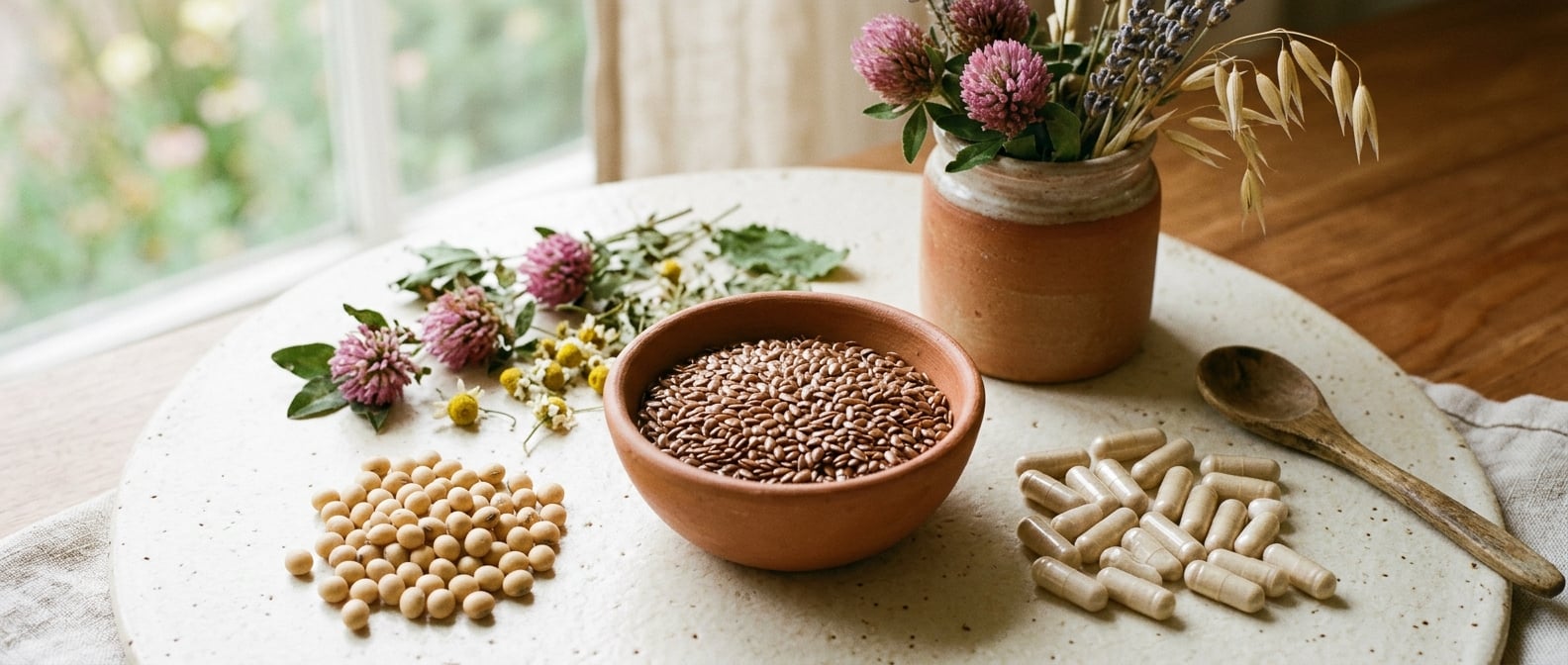
Phytoestrogens are natural compounds found in certain plants that are shaped just enough like your own estrogen to gently interact with estrogen receptors in your body. Think of them as a soft, plant-based whisper of estrogen — far weaker than the hormone your ovaries once made, but enough that many women notice a difference during menopause.
The two most studied types are:
- Isoflavones — found in soy foods like edamame, tofu, tempeh, and soy milk.
- Lignans — found in flaxseed, whole grains, and many legumes.
What Does the Research Say?
The evidence is genuinely encouraging, though it varies from woman to woman.
- A 12-week trial found that a plant-based diet rich in soy reduced moderate-to-severe hot flashes dramatically in many participants.
- A randomized study found that 40 grams of ground flaxseed a day cut hot flash frequency by about half over six weeks in postmenopausal women.
- Reviews consistently show modest but real relief of hot flashes and vaginal dryness from whole-food phytoestrogens.
Why does it work for some women and not others?
Here is the fascinating part: soy isoflavones work best when your gut bacteria can convert them into a stronger compound called equol. Only about 30–50% of women have the specific gut bacteria to do this well. So if soy seems to help your friend more than you, your gut microbiome may be the reason — not your imagination.
Whole Foods Beat Supplements
Research strongly favors getting phytoestrogens from real food rather than concentrated pills. Whole foods come with fiber, protein, and other nutrients that work together — and they have a much stronger safety record than isolated isoflavone supplements.
Easy ways to add them:
- Edamame as a snack or added to salads and stir-fries.
- Tofu or tempeh in place of some meat a few times a week.
- Soy milk in your morning coffee or oats.
- Ground flaxseed (1–2 tablespoons) stirred into yogurt, smoothies, or oatmeal. Always choose ground flax — whole seeds pass through undigested.
Is Soy Safe?
This is one of the most common worries, so let us be clear: large studies show no link between whole-food soy and increased breast cancer risk. In fact, some data suggest soy may be protective. That said, if you have a history of breast cancer or another hormone-sensitive condition, talk with your oncologist before leaning heavily on phytoestrogens.
A Gentle, Realistic Expectation
Phytoestrogens are not a magic switch — they are a gentle, food-first tool that helps some women meaningfully and others only a little. Because the response is so individual, the smartest approach is to add them consistently for a few weeks and track how you feel.
GoBloomWell lets you log your hot flashes and daily habits so you can see whether adding soy or flaxseed actually makes a difference for you. Start tracking for free today.