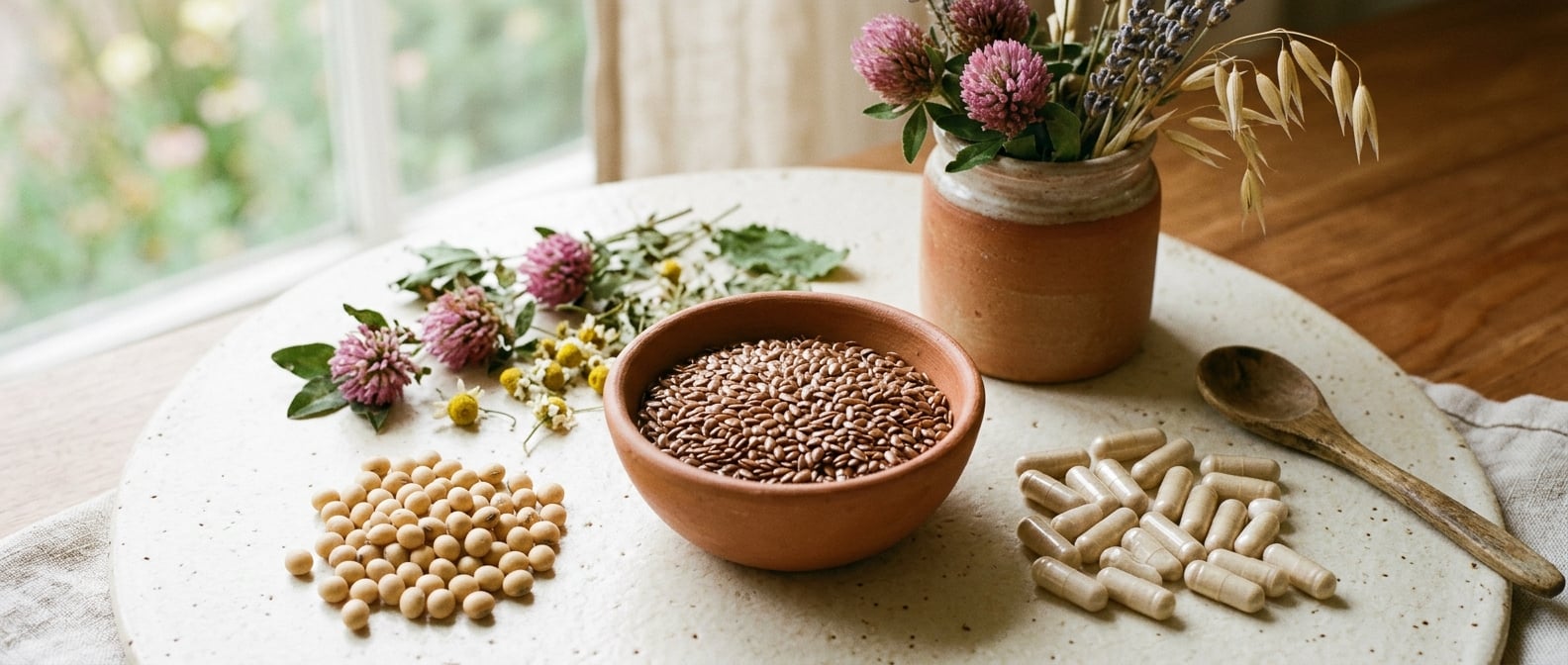
The Supplement Question
With hundreds of menopause supplements on the market, it's hard to know what actually works. Let's look at what research says about the most popular options.
Important disclaimer: Always consult your healthcare provider before starting any supplement, especially if you're on medications or have health conditions.
Supplements With Research Support
Black Cohosh
What it's for: Hot flashes and night sweats
Black cohosh is one of the most studied menopause supplements. Several clinical trials have shown modest improvements in hot flash frequency and severity. The mechanism isn't fully understood, but it appears to interact with serotonin receptors.
Dosage commonly studied: 20-40mg standardized extract, twice daily
Note: Not recommended for women with liver conditions.
Magnesium Glycinate
What it's for: Sleep, anxiety, muscle cramps, headaches
Magnesium is involved in over 300 biochemical reactions in your body. Many women are deficient, and supplementation can help with sleep quality, muscle tension, and mood. Glycinate is the form best tolerated by the digestive system.
Dosage commonly used: 200-400mg at bedtime
Vitamin D
What it's for: Bone health, mood, immune function
Estrogen decline accelerates bone loss, making vitamin D crucial during menopause. It also supports mood and immune function. Many women are deficient, especially in northern climates.
Dosage: Get your levels tested; 1000-2000 IU daily is a common maintenance dose.
Omega-3 Fatty Acids
What it's for: Mood, inflammation, heart health
Omega-3s have anti-inflammatory properties and may help with mood stability and joint pain. Some research suggests they can reduce hot flash severity.
Dosage commonly studied: 1000-2000mg EPA+DHA daily
Ashwagandha
What it's for: Stress, anxiety, sleep
This adaptogenic herb has growing research support for reducing cortisol levels and improving stress resilience. Some women find it helpful for menopause-related anxiety and sleep.
Dosage commonly studied: 300-600mg daily of standardized extract
Supplements With Limited or Mixed Evidence
Evening Primrose Oil
Popular for hot flashes, but research results are mixed. Some women report benefit, but controlled studies haven't consistently shown superiority over placebo.
Soy Isoflavones
Contain plant-based estrogens. Some studies show modest hot flash reduction; others show no benefit. Results may depend on your gut microbiome's ability to convert isoflavones.
Red Clover
Similar to soy isoflavones, contains phytoestrogens. Research results are inconsistent.
How to Approach Supplements Wisely
- Start one at a time — so you know what's actually helping
- Give it time — most supplements need 4-8 weeks to show effects
- Track your symptoms — this is the only way to objectively measure whether a supplement is working
- Buy quality — look for third-party tested brands (USP, NSF, ConsumerLab)
- Tell your doctor — supplements can interact with medications
Use GoBloomWell to track your symptoms before and after starting a supplement — your data will show whether it's actually making a difference. Start tracking free.