Why Your Skin and Hair Are Changing
If your skin feels drier, thinner, or less bouncy — or your hair seems finer — estrogen is the reason. Estrogen fuels collagen, the protein that keeps skin firm and hydrated. In the first five years of menopause, skin can lose up to 30% of its collagen, which means more dryness, fine lines, and slower healing. Hair follicles are affected too, leading to thinning on the scalp. It is completely normal — and there is a lot you can do to support your skin and hair naturally.
Nourish From Within
Beautiful skin and hair start on your plate:
- Protein provides the building blocks for collagen and keratin — include it at every meal.
- Omega-3 fats (fatty fish, walnuts, flaxseed) keep skin supple and calm inflammation.
- Colorful antioxidants — vitamins A, C, and E from fruit and vegetables — protect and repair skin.
- Zinc and selenium (nuts, seeds, whole grains) support healthy hair and skin repair.
- Water — hydration from the inside genuinely shows on the outside.
Some women find collagen peptides help with skin hydration and elasticity; evidence is growing and they are generally safe to try.
A Gentle, Protective Skincare Routine
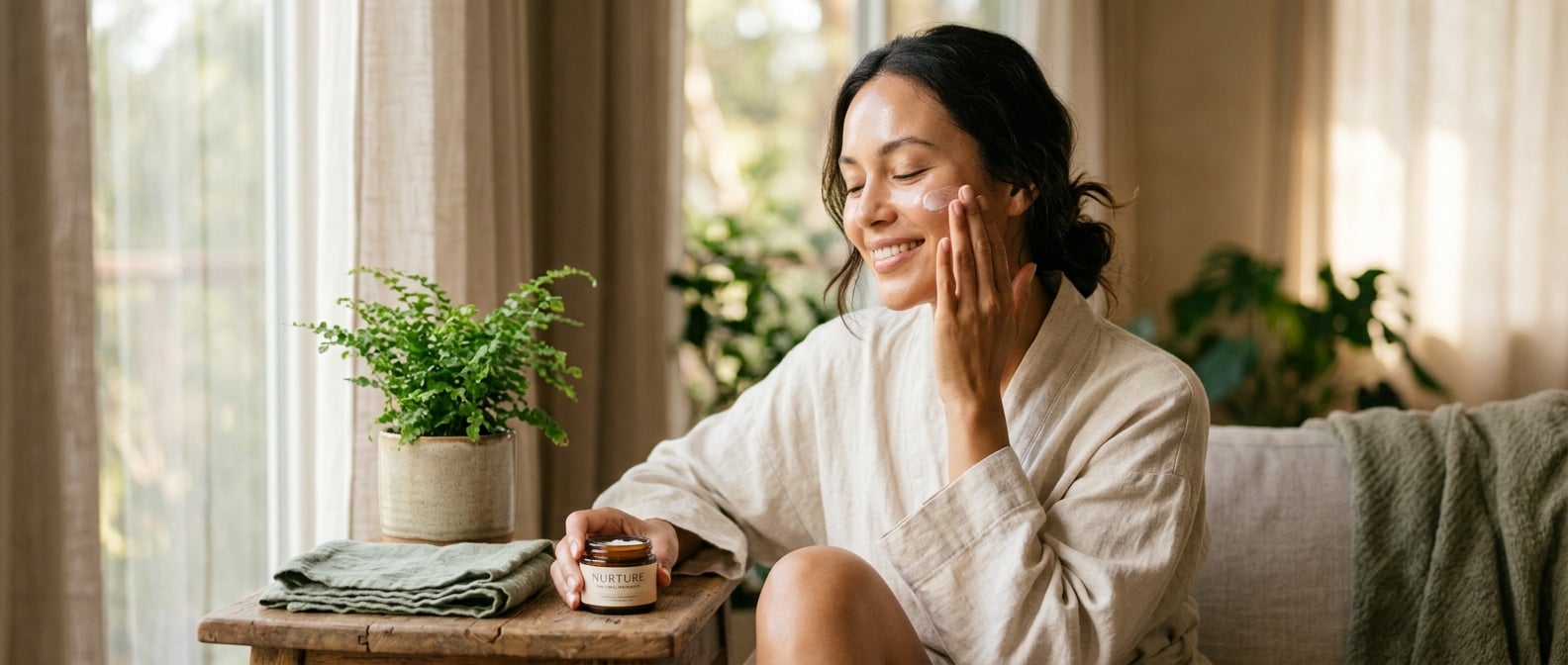
Menopausal skin loves kindness, not harshness:
- Sunscreen every day (SPF 30+) — the single most powerful anti-aging step. Sun accelerates collagen loss and age spots.
- Swap harsh soaps for a mild, fragrance-free cleanser to protect your moisture barrier.
- Moisturize with hydrating heroes — look for hyaluronic acid and glycerin to draw in moisture.
- Add a retinol or peptide at night to gently support collagen (start slowly if your skin is sensitive).
Caring for Thinning Hair
- Be gentle — avoid tight styles, excessive heat, and harsh treatments.
- Feed your hair with enough protein, iron, and those key vitamins and minerals.
- Massage your scalp to support circulation, and choose nourishing, sulfate-free products.
- Noticing unwanted facial hair? That is a normal hormonal shift too, and simple cosmetic options can help.
Lifestyle Glow-Ups
Don't smoke (it starves skin of blood flow), protect your sleep, and manage stress — high cortisol breaks down collagen and worsens inflammation. Gentle movement boosts circulation and gives skin a natural glow.
When to See a Professional
Most changes are a normal part of this transition. But if you have sudden or significant hair loss, a stubborn rash, or a skin spot that is changing, see a dermatologist. For some women, hormone therapy improves skin thickness and hydration as a welcome side benefit — one more thing to discuss with your doctor.
Be Kind to the Skin You're In
These changes are a natural chapter, not a flaw. With nourishing food, gentle care, and daily sun protection, your skin and hair can look and feel healthy and radiant through menopause and beyond.
GoBloomWell helps you track habits like hydration, sleep, and stress — the everyday things that show up in your skin and hair. Start tracking for free today.