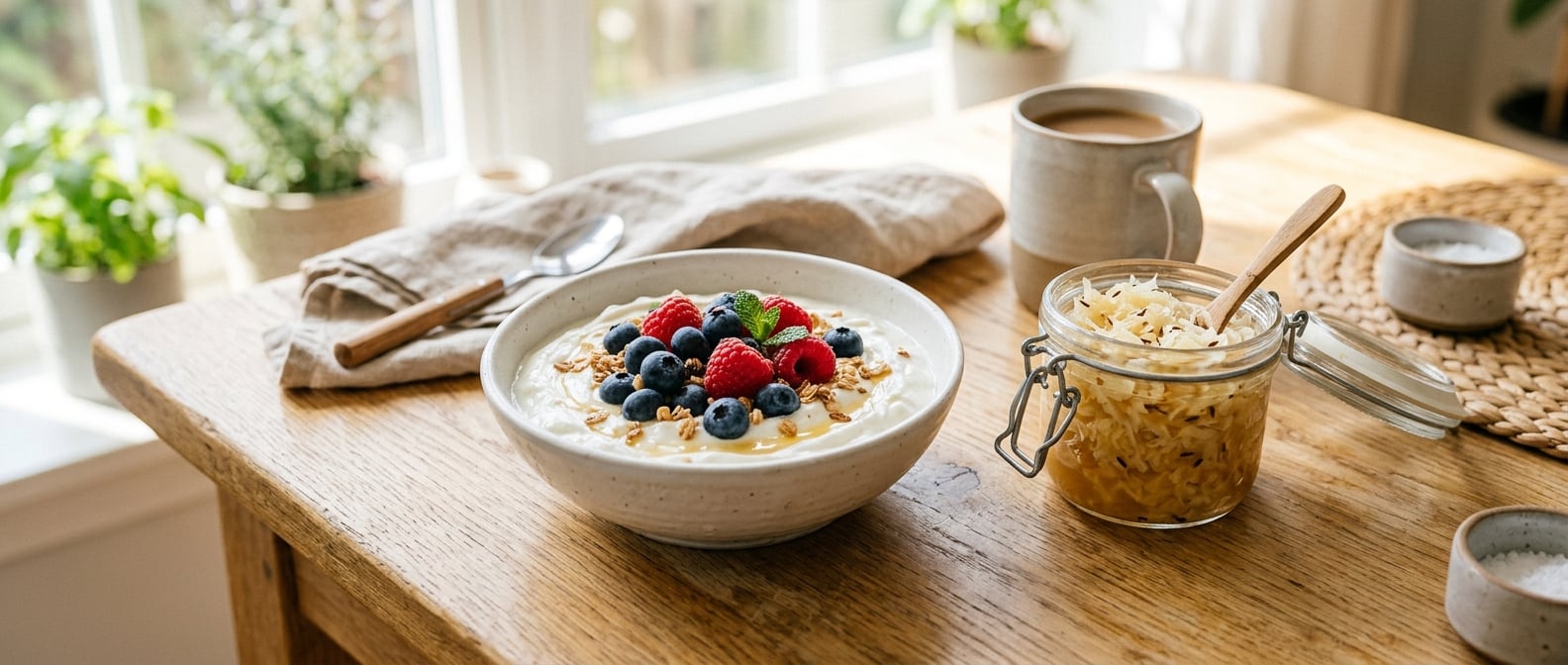
Your Gut and Your Hormones Are a Team
Here is something that surprises most women: your gut bacteria help manage your estrogen. A special community of microbes — nicknamed the estrobolome — influences how much estrogen your body holds onto versus clears out. When your gut is balanced and diverse, this system runs smoothly. When it is out of balance, it can nudge symptoms and bloating in the wrong direction.
What Is the Estrobolome?
The estrobolome is the group of gut bacteria that process estrogen. They produce an enzyme that decides whether estrogen gets recycled back into your body or sent out. A healthy, diverse microbiome keeps this in gentle balance — supporting steadier hormones, mood, and metabolism.
The Two-Way Street
Estrogen and your gut influence each other:
- Estrogen helps your gut — it supports a strong intestinal lining and microbial variety.
- So when estrogen falls in menopause, many women notice more bloating, slower digestion, and a less diverse microbiome. This can also shift how the body stores fat (more around the middle) and increase low-grade inflammation.
The encouraging flip side: caring for your gut can help buffer some of these changes.
How to Nourish Your Gut Naturally
Load up on fiber
Fiber is the single most powerful gut tool. It feeds beneficial bacteria and helps your body handle estrogen properly. Aim for variety:
- Vegetables and fruits of many colors
- Beans, lentils, and chickpeas
- Whole grains like oats and brown rice
- Nuts, seeds, and ground flaxseed
Add fermented foods (probiotics)
Live-culture foods introduce friendly bacteria:
- Yogurt and kefir with live cultures
- Sauerkraut, kimchi, miso, and tempeh
Feed them with prebiotics
Prebiotic foods are the fuel your good bacteria love: garlic, onions, leeks, asparagus, bananas, and whole grains.
Support the basics
Diverse plants, enough water, regular movement, good sleep, and lower stress all help your microbiome thrive. Try to limit ultra-processed foods and unnecessary antibiotics.
A Happier Gut, A Gentler Menopause
When your gut is well-fed, many women notice less bloating, steadier energy and mood, and better digestion — plus long-term benefits for weight and heart health. It is one of the most rewarding natural investments you can make in midlife.
As always, this complements — never replaces — your medical care. If you have ongoing digestive issues, check with your doctor.
GoBloomWell helps you connect your food, digestion, and how you feel each day — so you can see how a gut-friendly routine supports your whole body. Start tracking for free today.