Food as Medicine During Menopause
What you eat during menopause matters more than ever. The right foods can help manage hot flashes, protect your bones and heart, support your mood, and maintain a healthy weight. The wrong foods can amplify symptoms and increase health risks.
This isn't about strict dieting — it's about nourishing your body through a major transition.
The Best Foods for Menopause
Phytoestrogen-Rich Foods
Phytoestrogens are plant compounds that weakly mimic estrogen in the body. Research suggests they can help reduce hot flashes and support bone health.
Top sources:
- Soy — tofu, tempeh, edamame, soy milk (aim for 1-2 servings daily)
- Flaxseeds — 1-2 tablespoons ground daily; also rich in omega-3s and fiber
- Chickpeas and lentils
- Sesame seeds
- Berries — contain lignans, a type of phytoestrogen
Note: Whole soy foods are fine; heavily processed soy supplements may not have the same benefits.
Calcium-Rich Foods
Bone loss accelerates dramatically after menopause. You need 1,200mg of calcium daily from food and supplements combined.
Best sources:
- Dairy — yogurt, cheese, milk (1 cup milk = ~300mg calcium)
- Sardines and canned salmon (with bones)
- Dark leafy greens — kale, bok choy, broccoli
- Fortified plant milks and orange juice
- Almonds
Omega-3 Fatty Acids
These anti-inflammatory fats support heart health, brain function, mood stability, and may reduce hot flash severity.
Best sources:
- Fatty fish — salmon, mackerel, sardines (aim for 2-3 servings per week)
- Walnuts and flaxseeds
- Chia seeds
- Hemp seeds
High-Quality Protein
Protein becomes increasingly important during menopause to preserve muscle mass, support bone health, and keep you satisfied.
Aim for 25-30g per meal from:
- Fish and seafood
- Chicken and turkey
- Eggs
- Greek yogurt and cottage cheese
- Legumes — beans, lentils, chickpeas
- Tofu and tempeh
- Nuts and seeds
Fiber-Rich Foods
Fiber supports digestive health, blood sugar stability, and weight management — all important during menopause.
Target: 25-30g daily from:
- Vegetables (especially cruciferous: broccoli, cauliflower, Brussels sprouts)
- Fruits (with the skin on)
- Whole grains — oats, quinoa, brown rice, barley
- Legumes
- Chia seeds and flaxseeds
Colorful Fruits and Vegetables
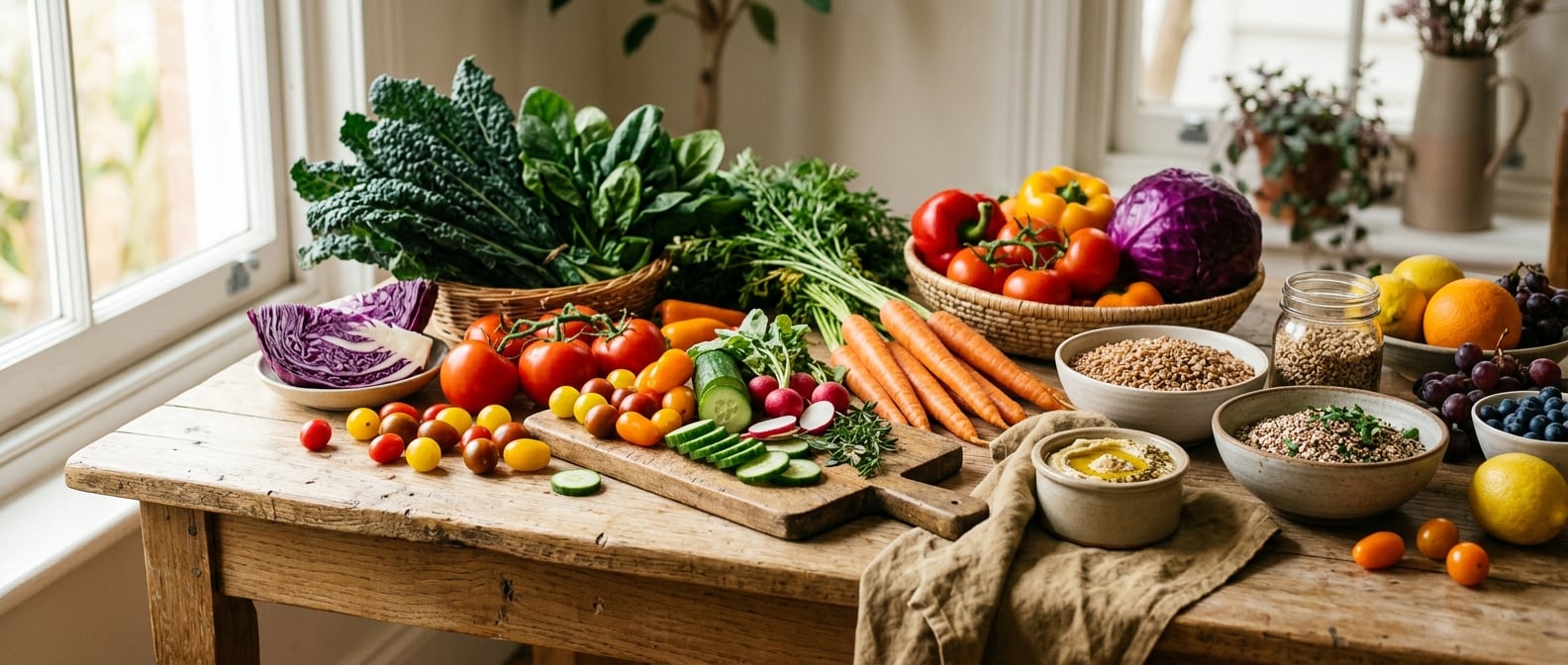
The more colors on your plate, the more antioxidants and phytonutrients you're getting. These protect against inflammation, support brain health, and reduce disease risk.
Prioritize:
- Dark berries — blueberries, blackberries, raspberries (antioxidant powerhouses)
- Leafy greens — spinach, kale, Swiss chard (calcium, magnesium, folate)
- Orange/yellow vegetables — sweet potatoes, carrots, squash (beta-carotene)
- Cruciferous vegetables — broccoli, cauliflower, cabbage (estrogen metabolism support)
- Tomatoes — lycopene supports bone density
Vitamin D Sources
Vitamin D is critical for calcium absorption and bone health. Many menopausal women are deficient.
Food sources:
- Fatty fish
- Egg yolks
- Fortified foods
- Mushrooms exposed to sunlight
Most women also need a supplement of 1,000-2,000 IU daily — get your levels tested.
Foods to Limit During Menopause
Alcohol
Alcohol is a hot flash trigger, disrupts sleep architecture, increases breast cancer risk, and contributes to bone loss. If you drink, limit to 1 drink per day or less.
Added Sugar
Excess sugar promotes inflammation, weight gain, blood sugar spikes, and energy crashes. Read labels — sugar hides in sauces, dressings, and "healthy" snacks.
Highly Processed Foods
Ultra-processed foods are linked to increased inflammation, weight gain, and poorer health outcomes. Focus on whole, minimally processed foods.
Excessive Caffeine
Your caffeine sensitivity may increase during menopause. If you're experiencing hot flashes, anxiety, or insomnia, try reducing caffeine. Limit to 1-2 cups of coffee before noon.
Spicy Foods
A common hot flash trigger for many women. You don't have to eliminate them entirely — just notice if they affect you.
A Day of Eating for Menopause
Breakfast: Greek yogurt with ground flaxseed, berries, and walnuts. Green tea.
Lunch: Large salad with kale, chickpeas, avocado, pumpkin seeds, and olive oil dressing. Sardines or grilled chicken on top.
Snack: Apple slices with almond butter. Glass of fortified plant milk.
Dinner: Baked salmon with roasted broccoli and sweet potato. Side of quinoa.
Evening: Chamomile tea. Small square of dark chocolate (70%+).
The Mediterranean Diet Connection
The Mediterranean diet consistently shows the best outcomes for menopausal women in research studies:
- Reduces hot flash severity
- Supports heart health
- Helps maintain healthy weight
- Protects bone density
- Supports cognitive function
- Associated with better mood and lower depression risk
It's not a "diet" in the restrictive sense — it's a way of eating that emphasizes fresh, whole foods, healthy fats, and the pleasure of shared meals.
Track your nutrition alongside your symptoms in GoBloomWell and see how food affects how you feel. Knowledge is power. Start tracking free.